Houses / Mallorca / Neuendorf House
Neuendorf House
Santanyí · Mallorca
- 11 guests
- 5 bedrooms
- 4 bathrooms
- Villa
A minimalist designed landmark in Santanyí, Mallorca
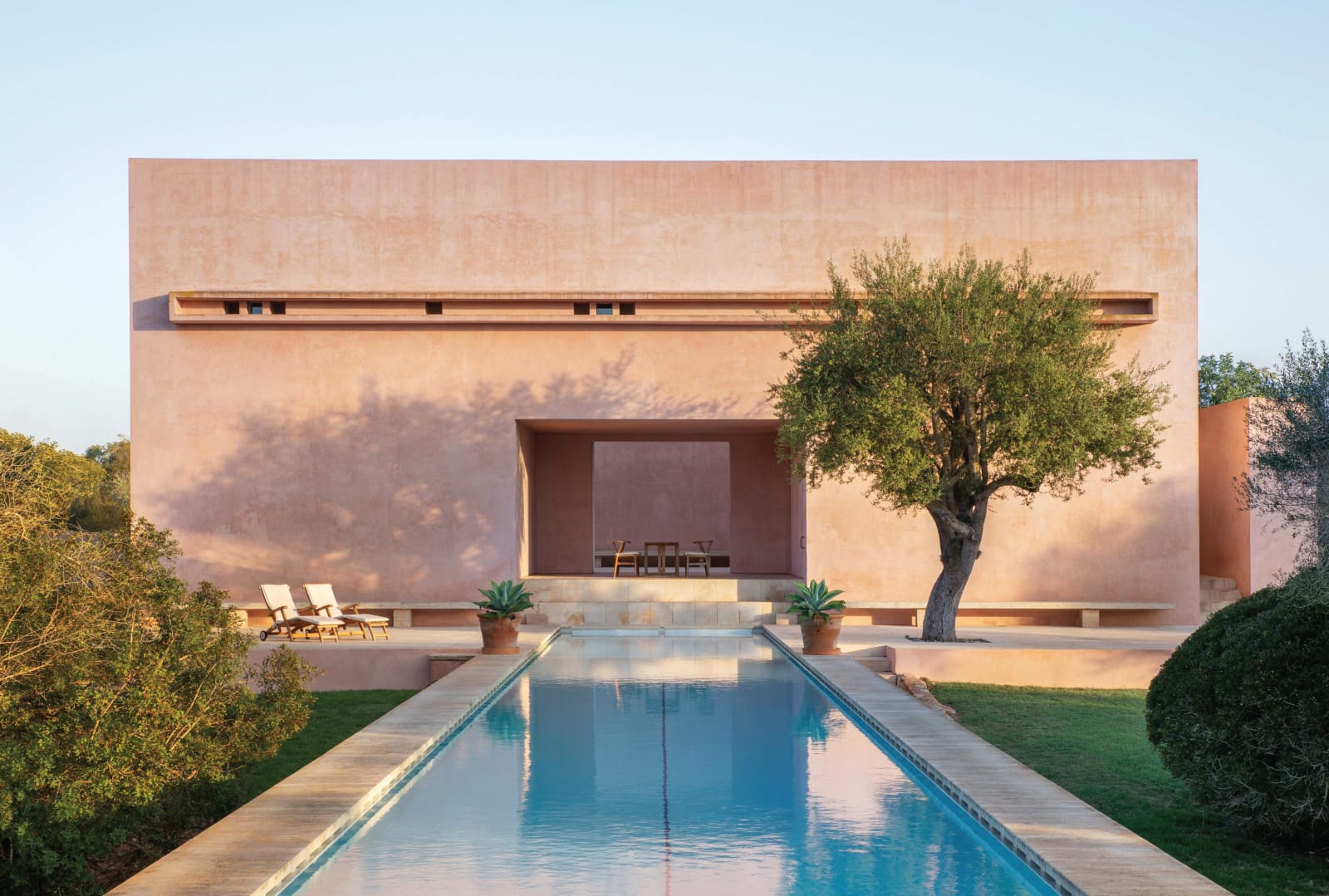
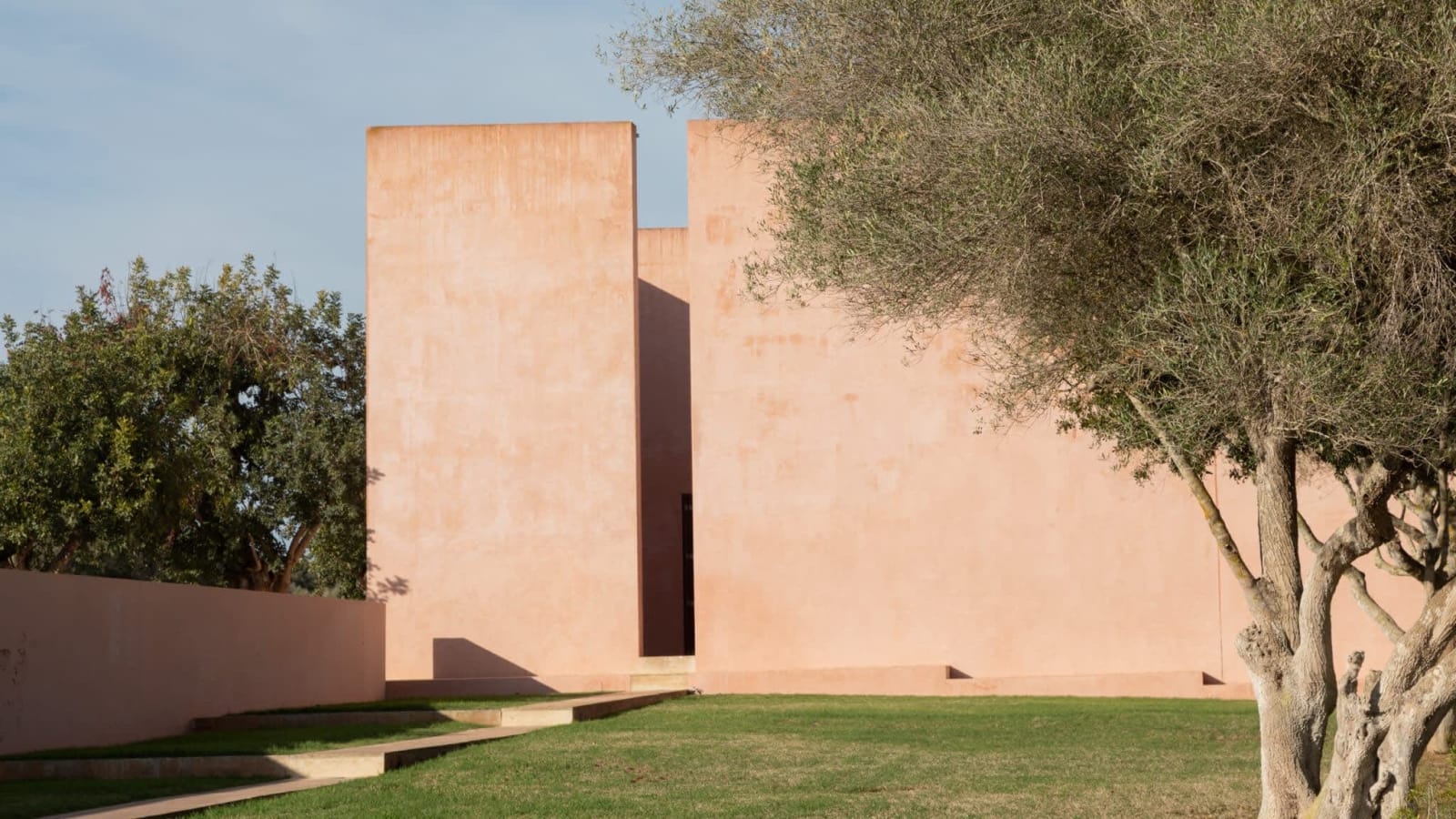
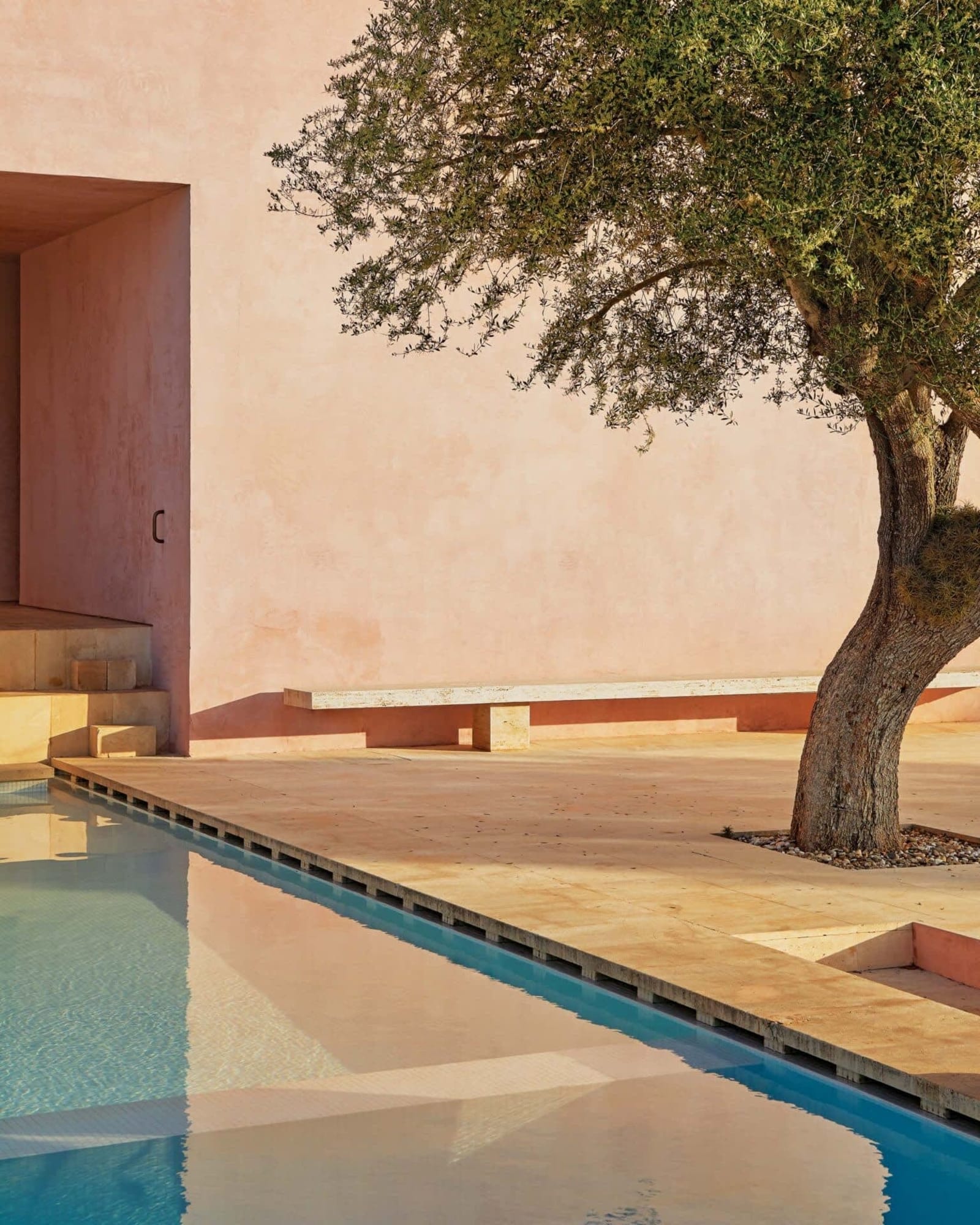
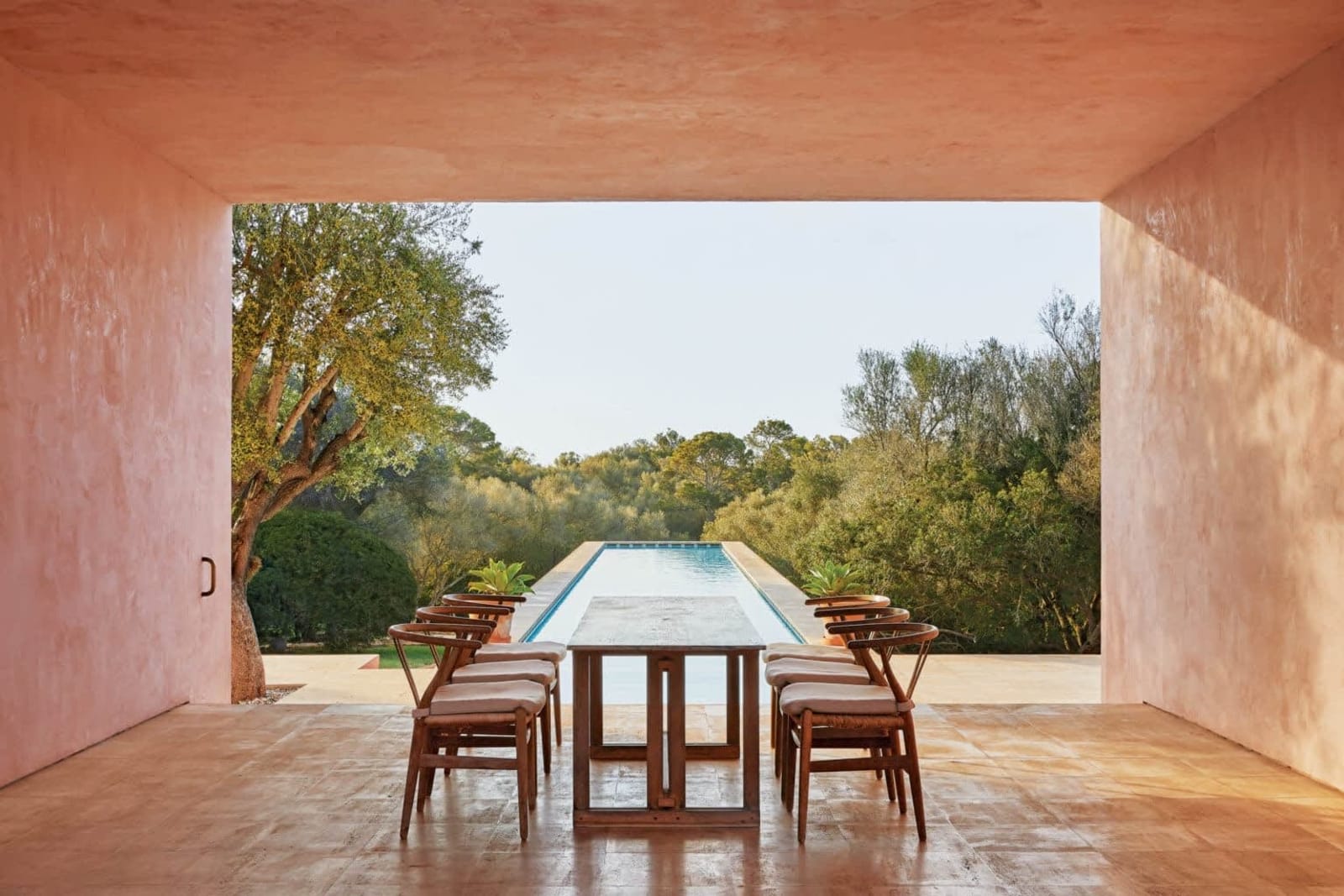
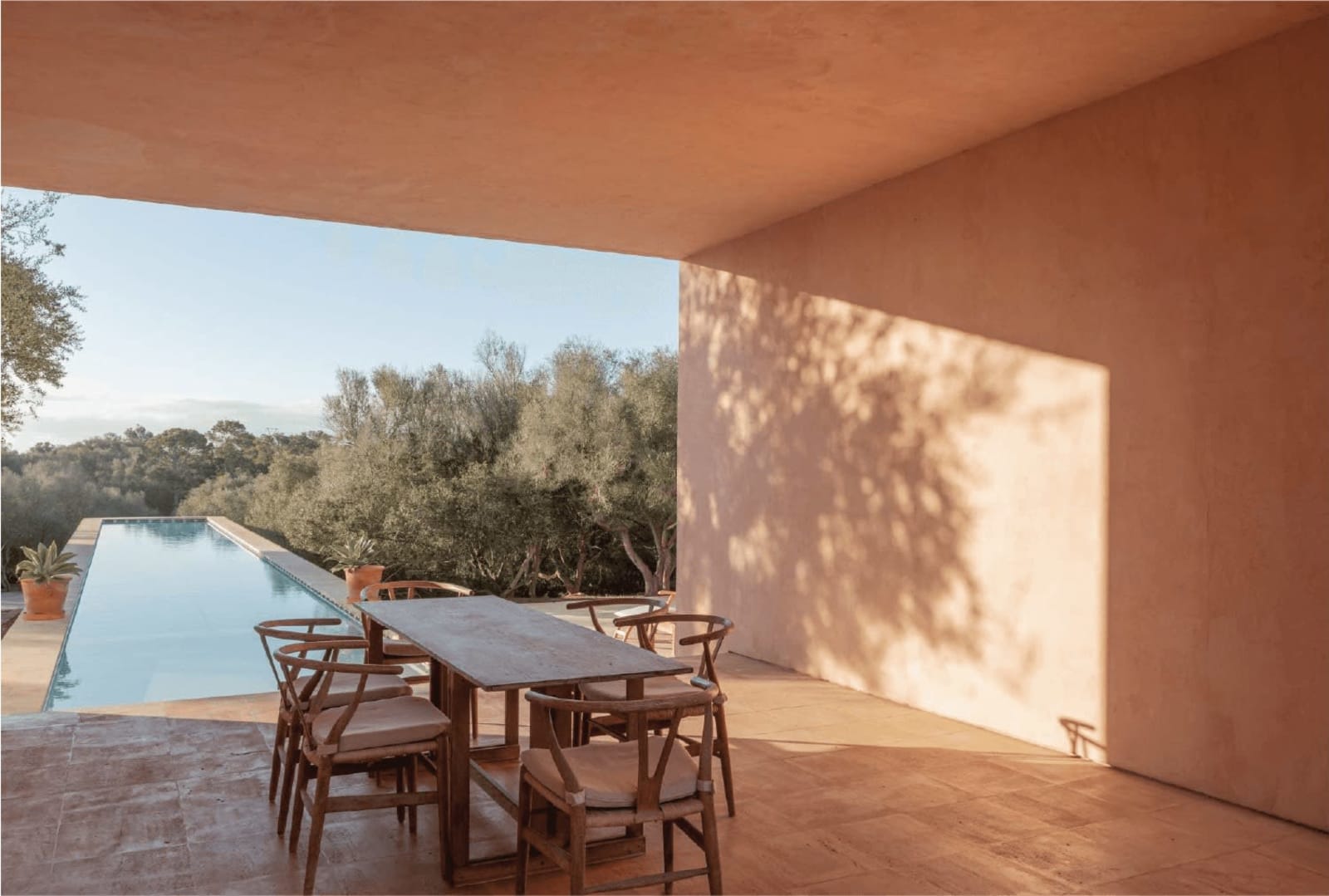
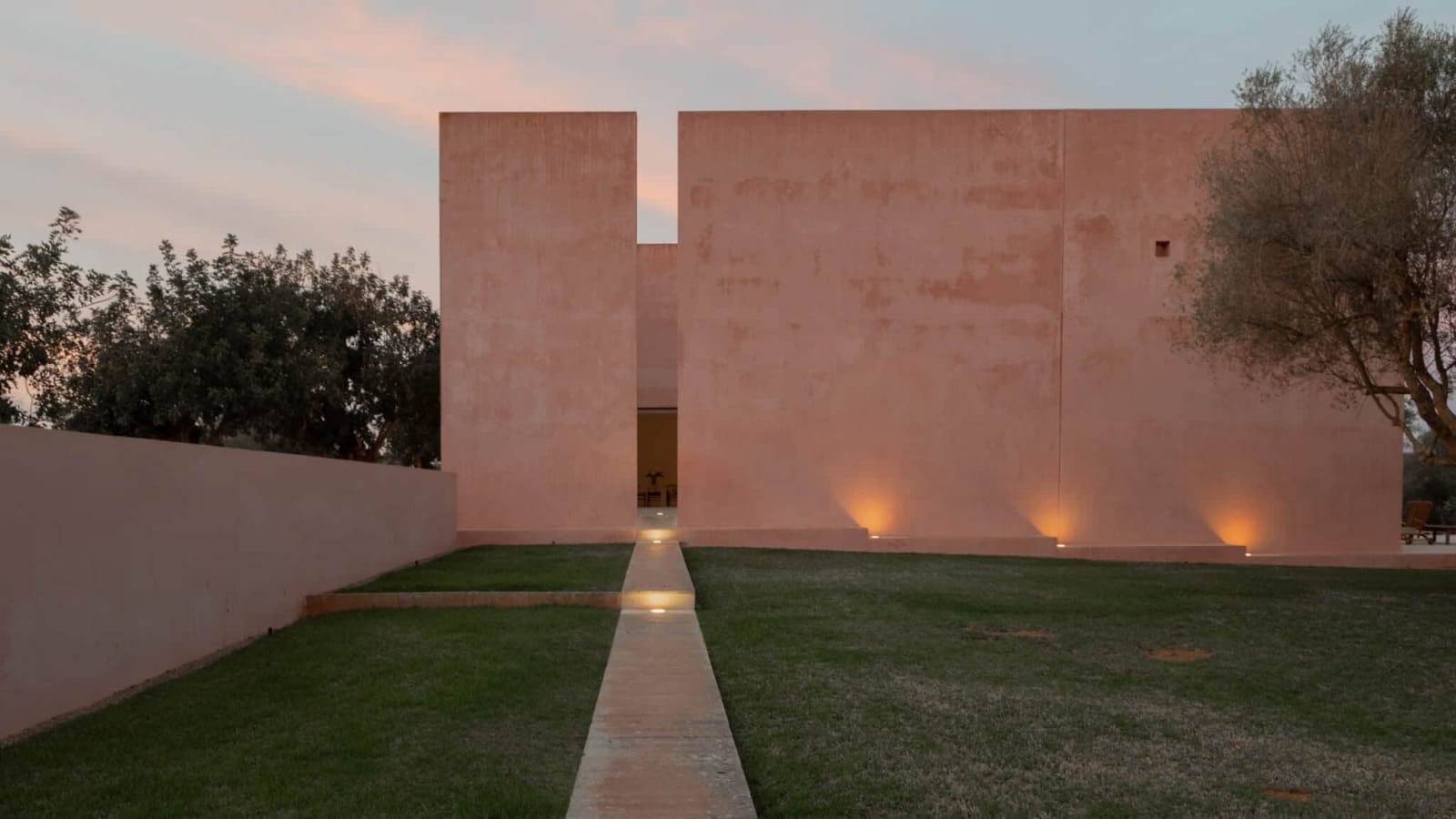
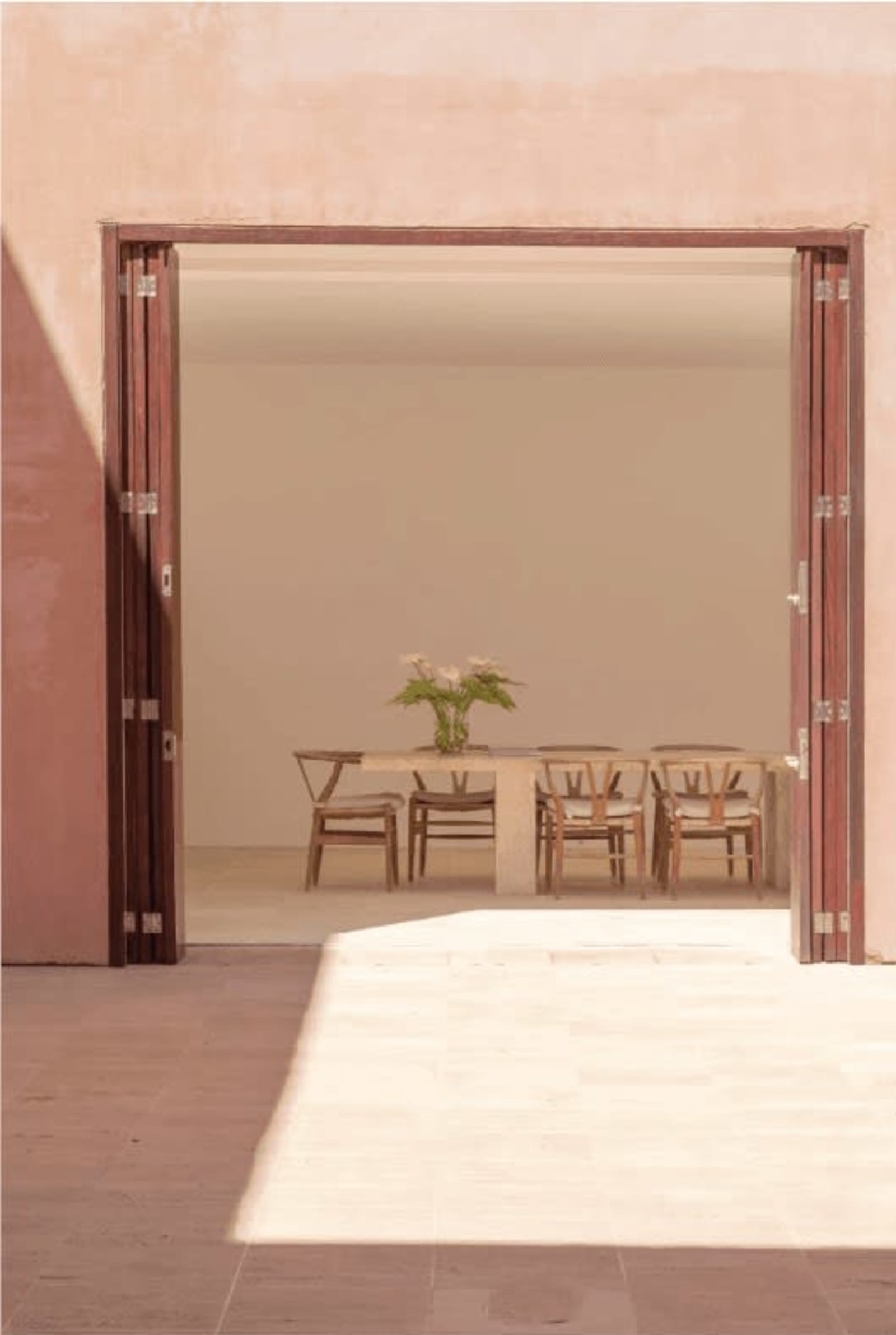
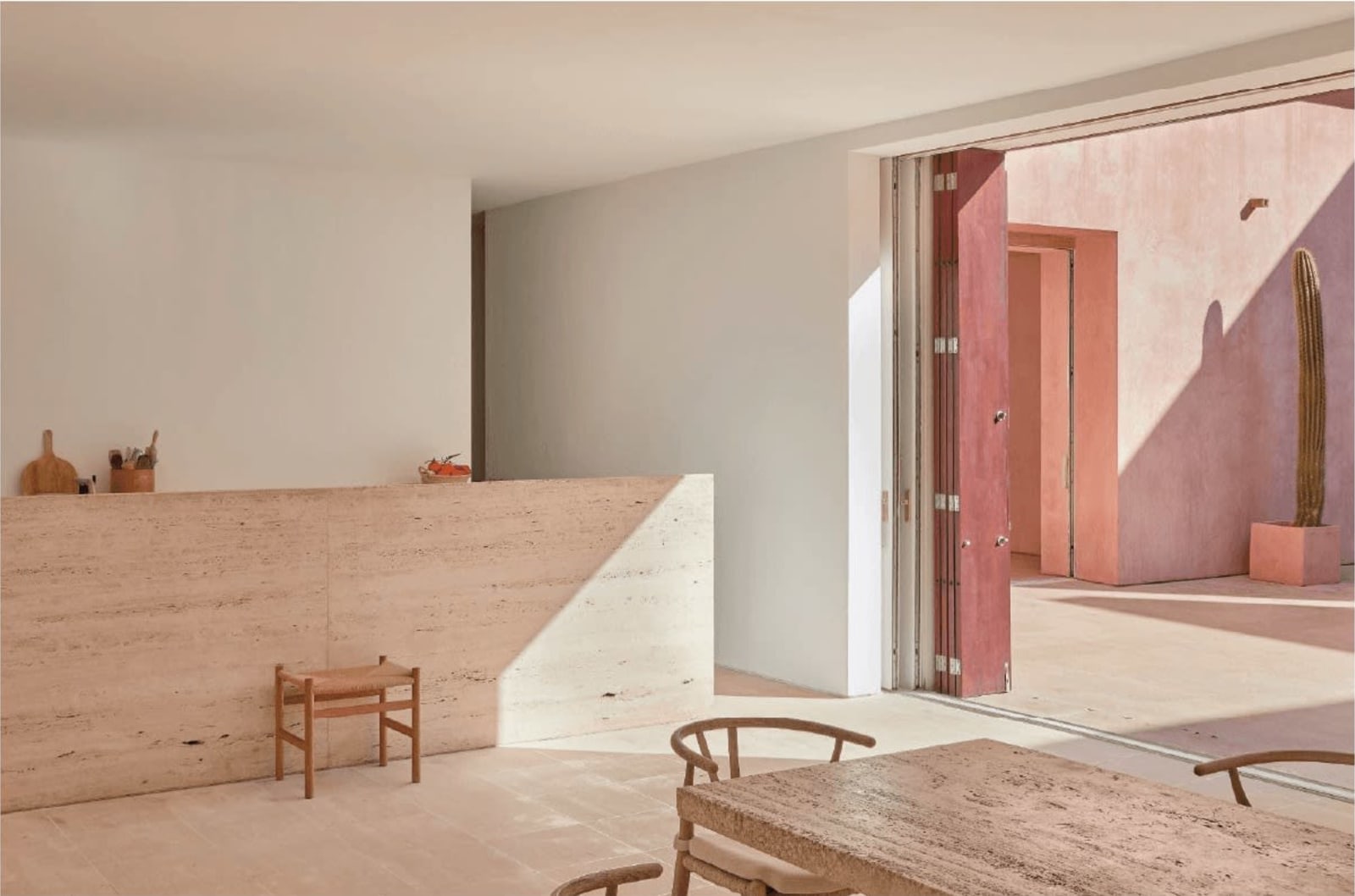
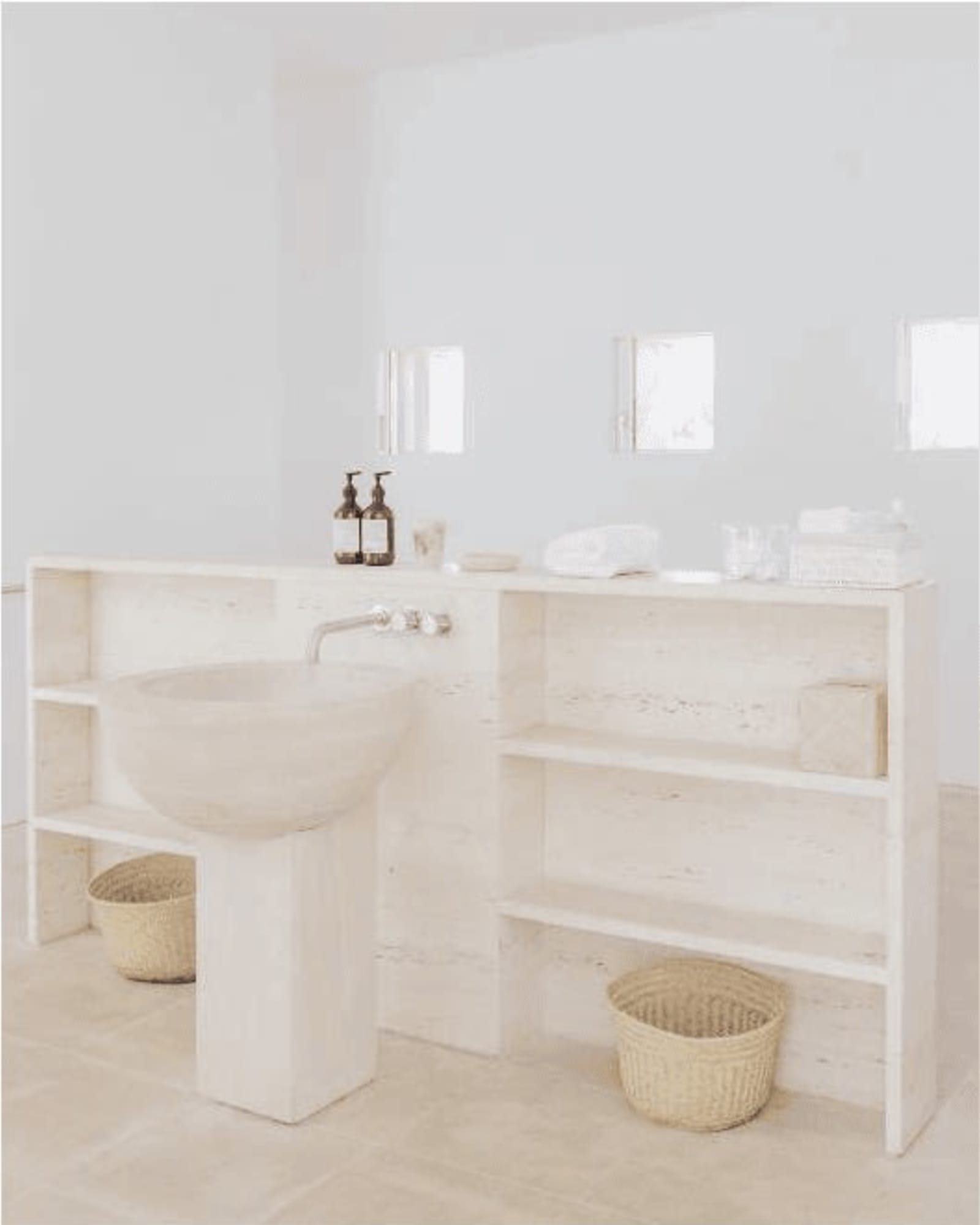
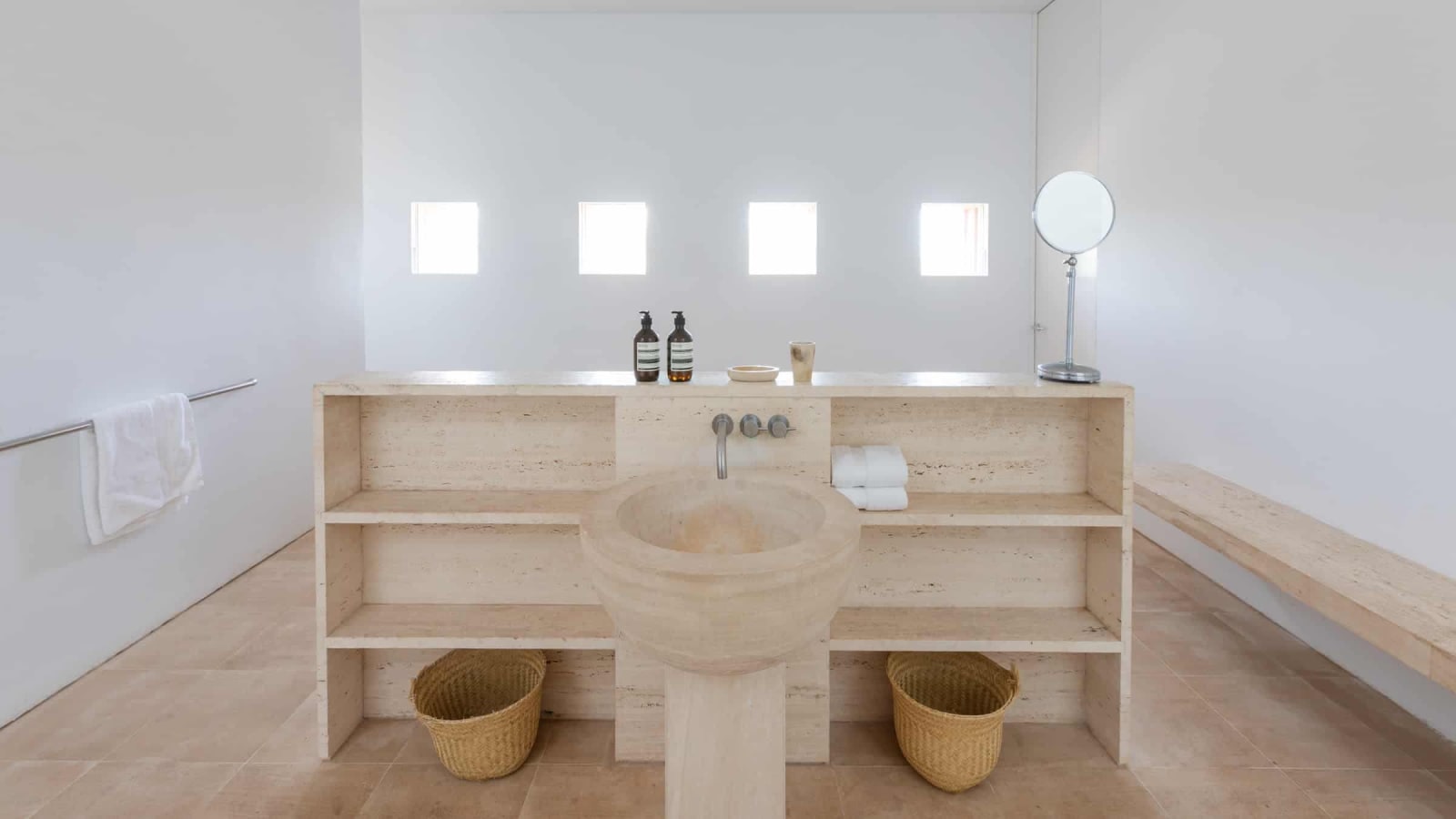
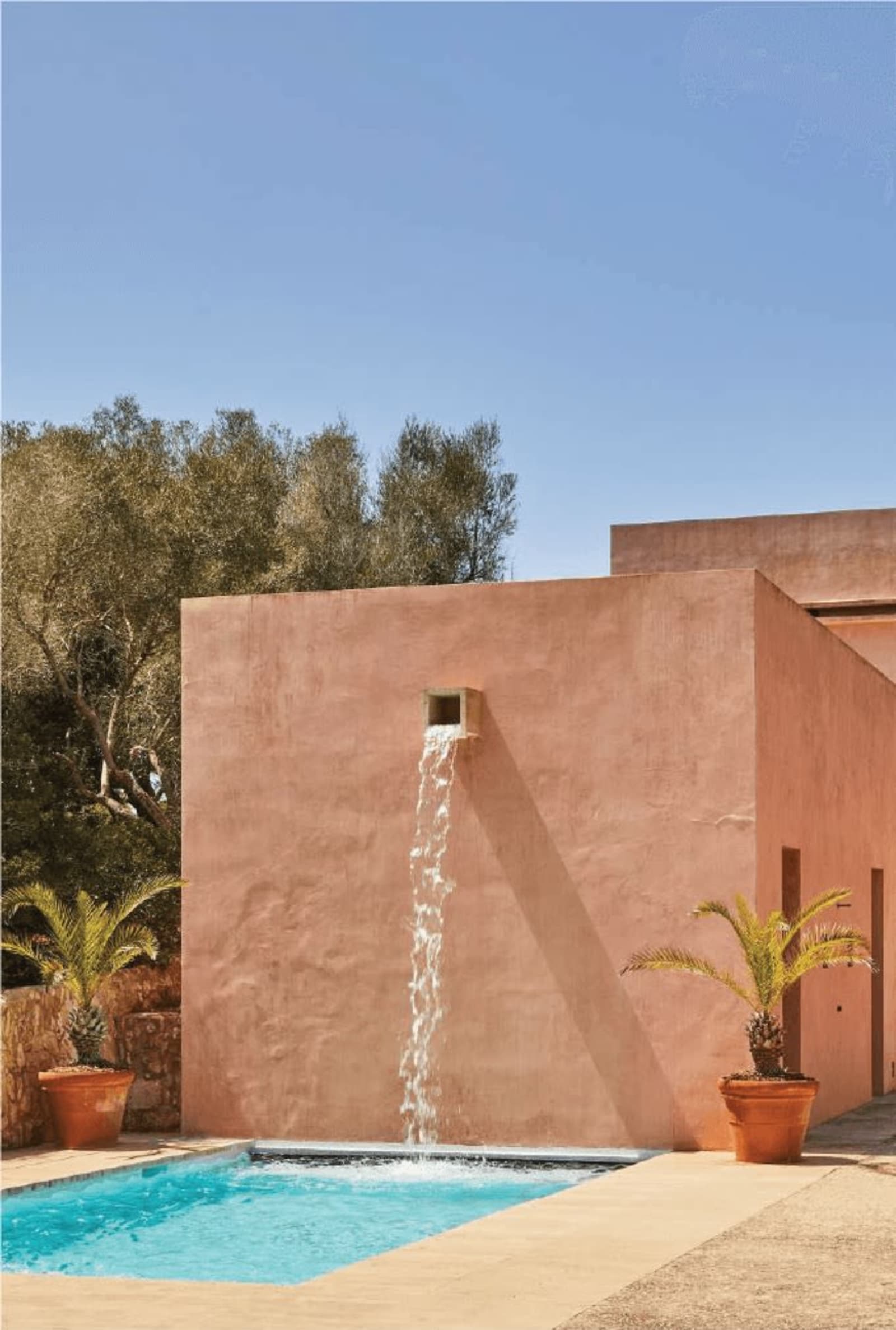
The house was completed in 1989 to a commission from the German art dealer Hans Neuendorf, designed by John Pawson and Claudio Silvestrin in the brief period they practised together, and it has since entered the canon as one of the founding built statements of architectural minimalism. The architectural language is reduced to a handful of moves: terracotta-pigmented rendered walls that take their colour from the surrounding soil, floors and benches cut from Santanyí sandstone, an enclosed entrance courtyard open to the sky, and a long, narrow lap pool that projects from the house into the grove like a drawn line. Nothing decorative survives the editing. The house remains in the Neuendorf family, who have restored and equipped it carefully for guests, and who also run an artist residency and an architecture visiting school on site, keeping the building in active cultural use rather than preserving it as a museum piece. It sleeps eleven across five bedrooms, with two salt-water pools, a clay tennis court, and a rooftop terrace facing the sea.
What's Here
- Pool
- Tennis
- Roof terrace
- Sea views
A minimalist designed landmark in Santanyí, Mallorca
The house was completed in 1989 to a commission from the German art dealer Hans Neuendorf, designed by John Pawson and Claudio Silvestrin in the brief period they practised together, and it has since entered the canon as one of the founding built statements of architectural minimalism. The architectural language is reduced to a handful of moves: terracotta-pigmented rendered walls that take their colour from the surrounding soil, floors and benches cut from Santanyí sandstone, an enclosed entrance courtyard open to the sky, and a long, narrow lap pool that projects from the house into the grove like a drawn line. Nothing decorative survives the editing. The house remains in the Neuendorf family, who have restored and equipped it carefully for guests, and who also run an artist residency and an architecture visiting school on site, keeping the building in active cultural use rather than preserving it as a museum piece. It sleeps eleven across five bedrooms, with two salt-water pools, a clay tennis court, and a rooftop terrace facing the sea.
Living Spaces
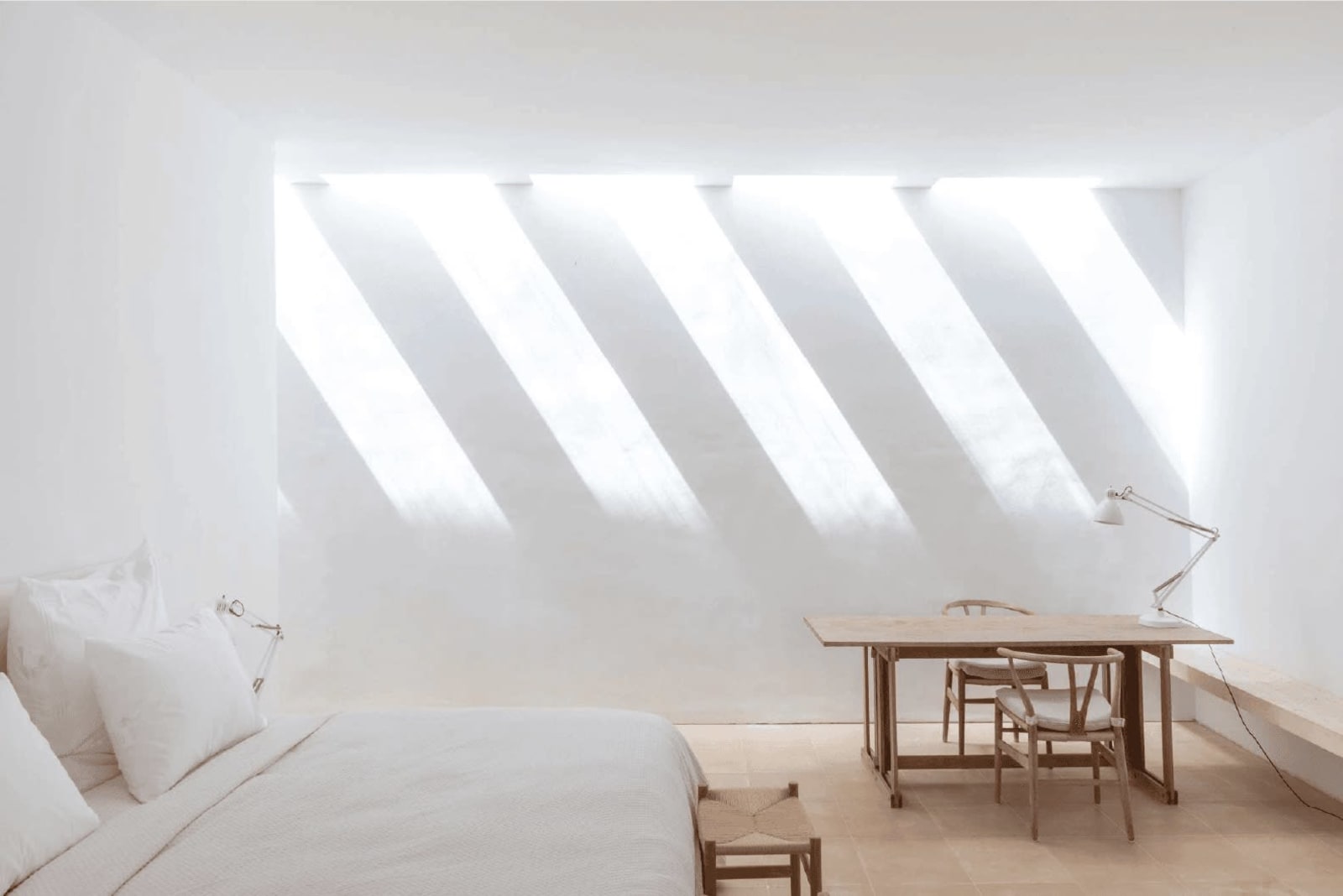
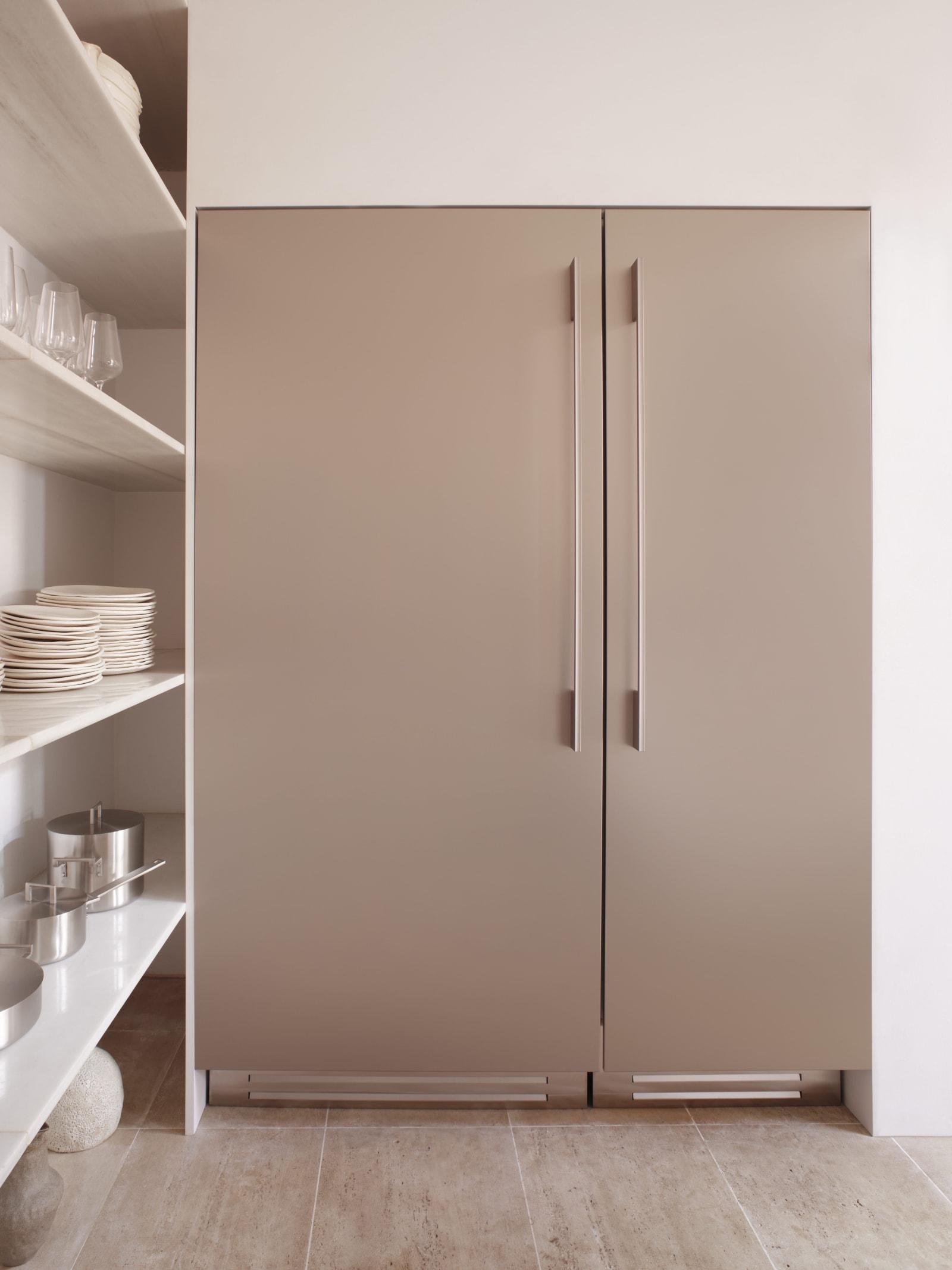
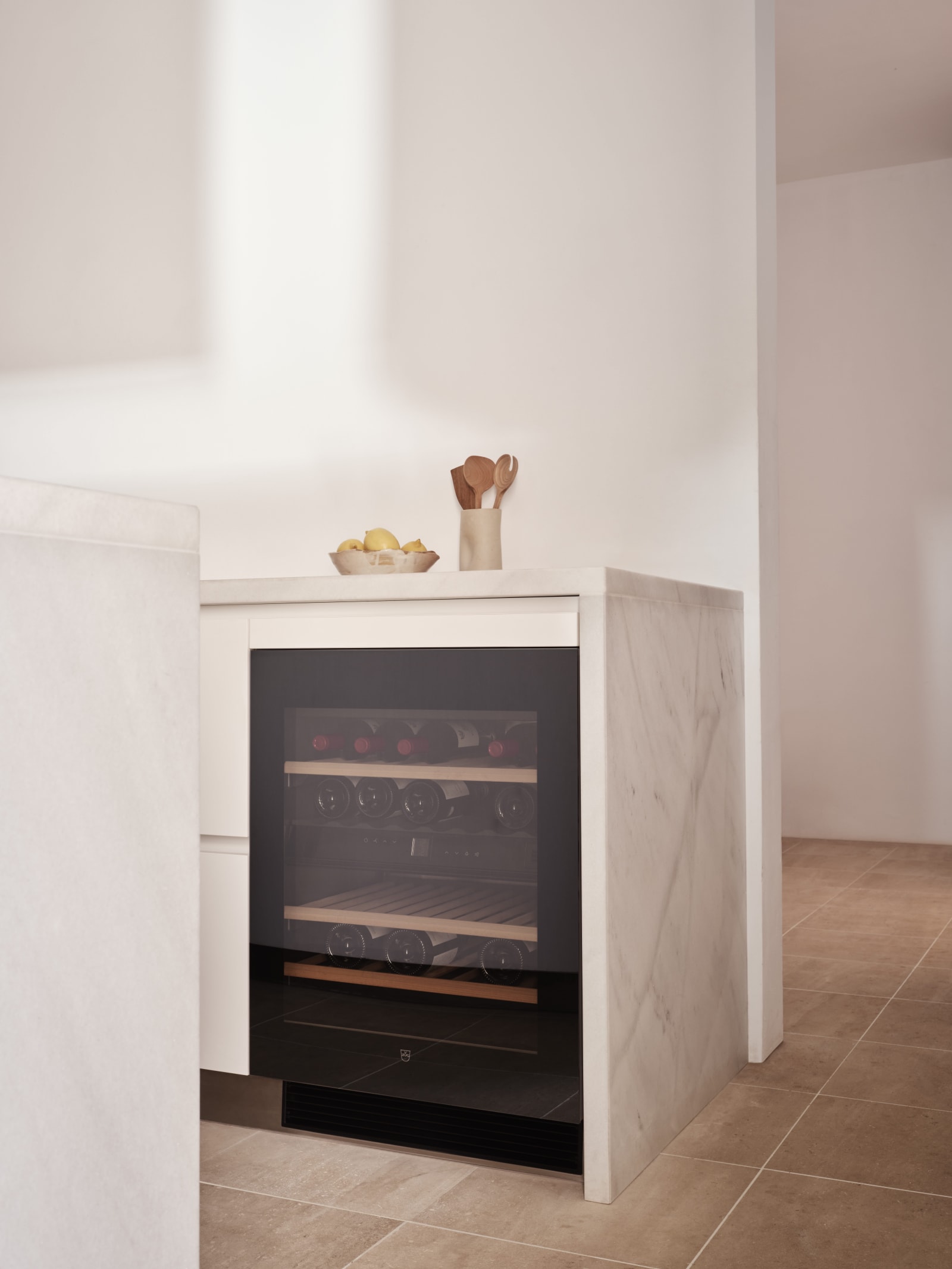
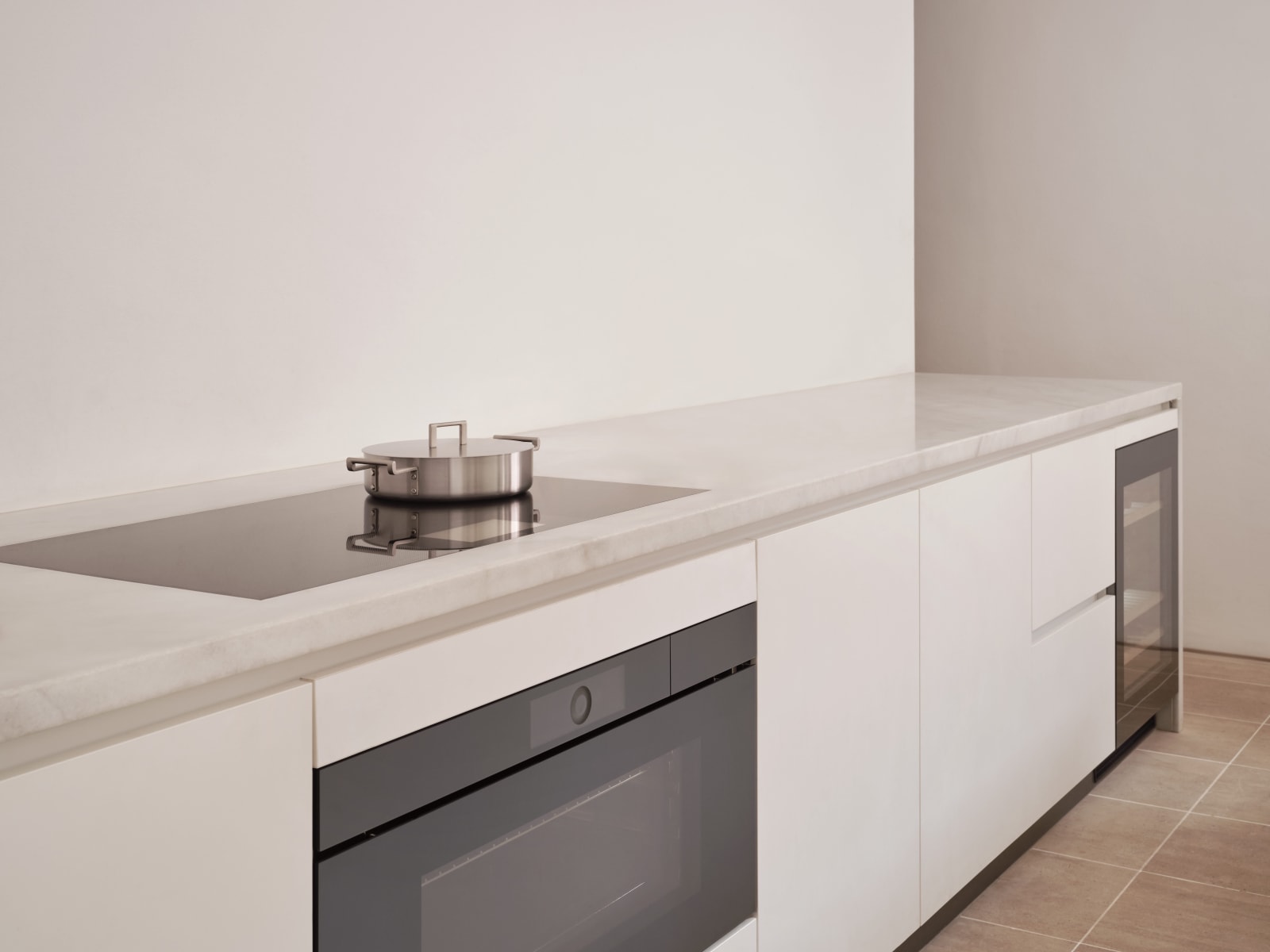
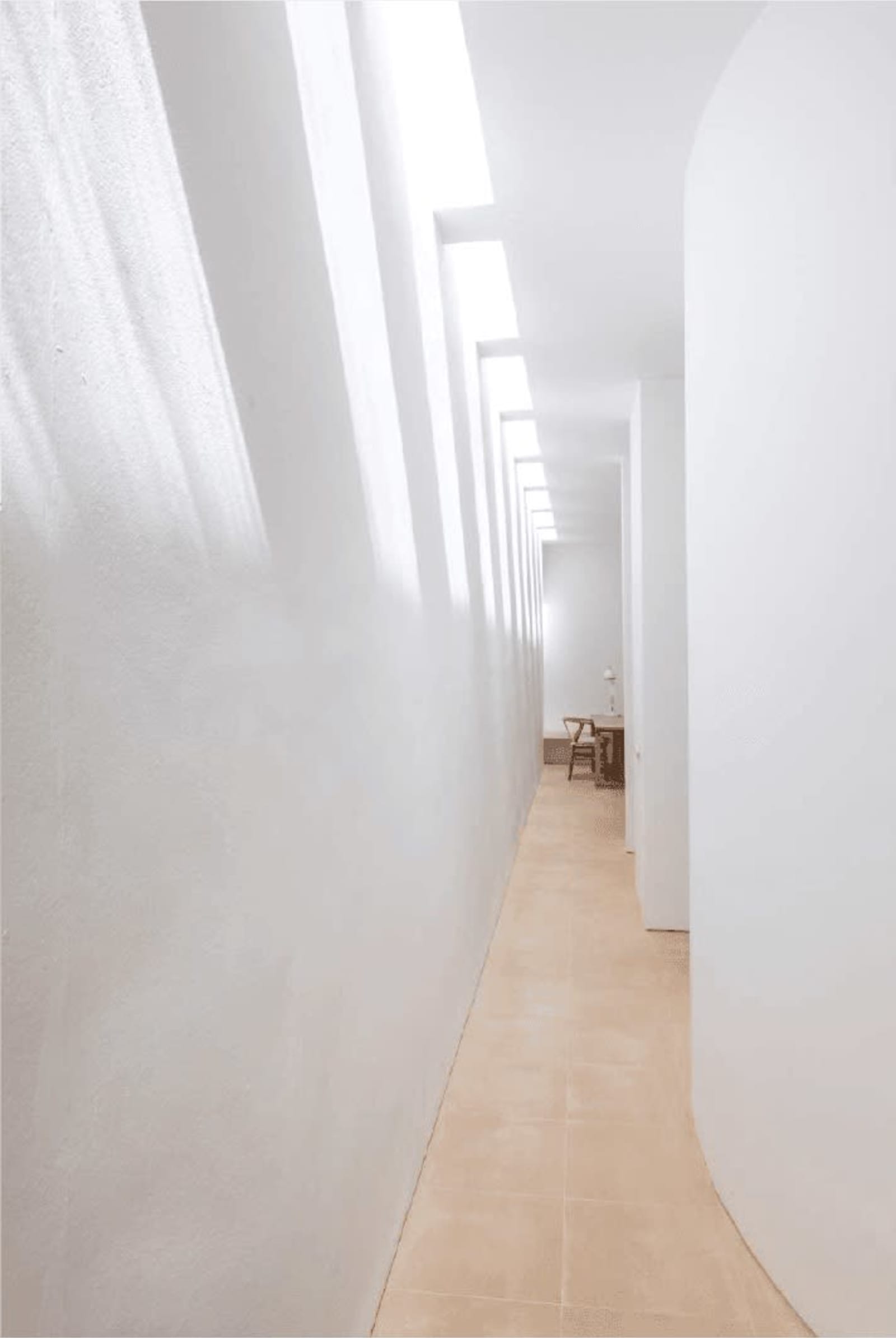
Inside, the rooms are tall and plain, with tiled floors, wood details and very little else. The open dining room and kitchen face onto the walled courtyard, and there is a study and a fireplace for cooler evenings. The kitchen is fully fitted, with a wine fridge, and the house has underfloor heating and air conditioning.
Bedrooms & Bathrooms
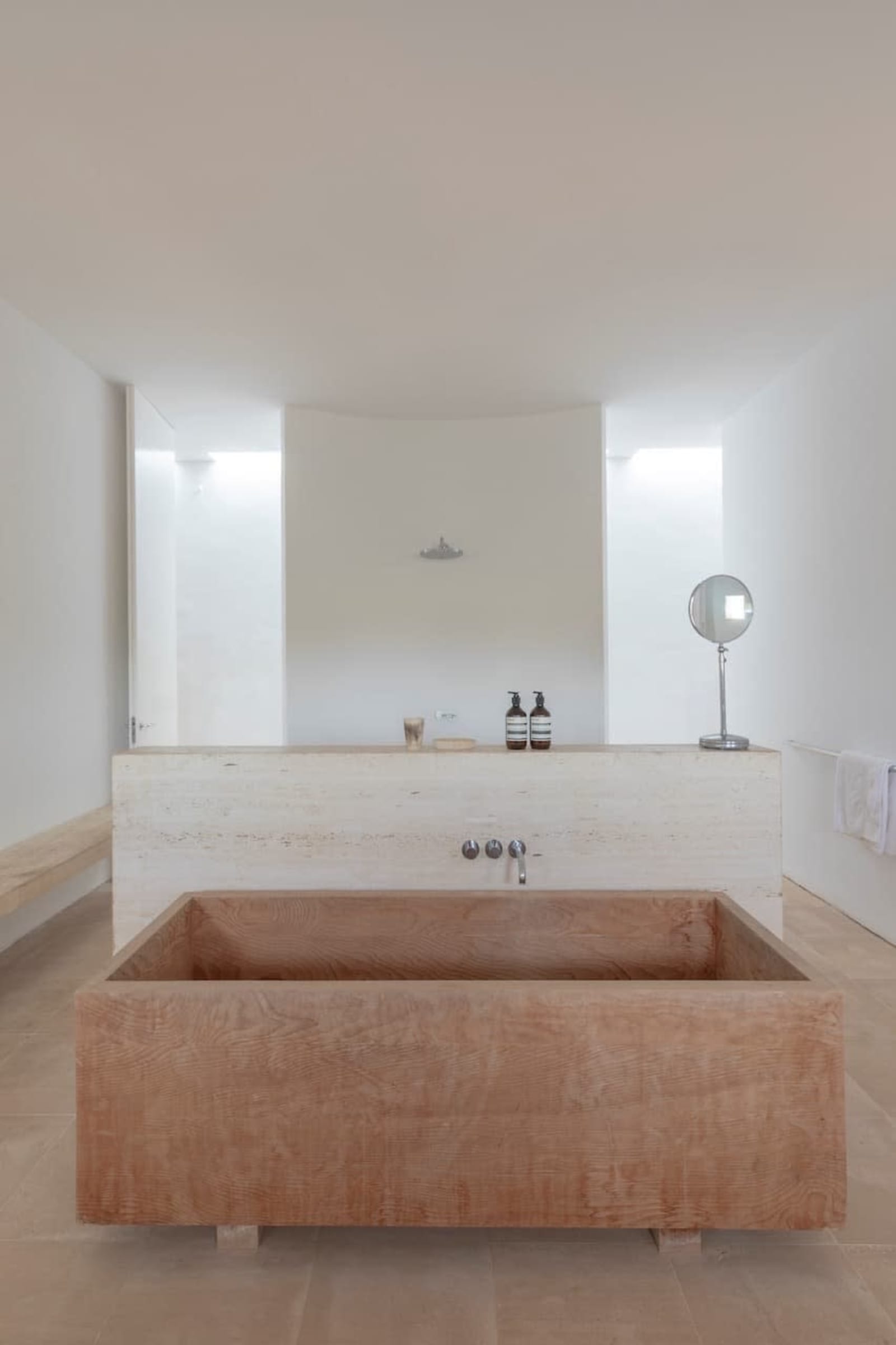
There are five bedrooms, four in the main house and one in a separate guest house, all with air conditioning. The main bedroom has its own bathroom with a bath and a separate shower. It sleeps ten, with room for an eleventh on request.
The Environment
The 30-metre lap pool runs out from the house into the almond grove and spills into a smaller pool below, which has a heated jacuzzi. There is a clay tennis court at the end of the garden, an organic vegetable garden and a cactus garden, and a roof terrace that looks out to the sea. The land runs to 13 hectares.
The Location
Santanyí occupies the quiet southeastern corner of Mallorca, an agricultural district of almond and carob groves on flat land that runs toward the coves of Cala Llombards and Cala Santanyí. The town gave its name to the honey-coloured sandstone quarried here for centuries and used across the island, from village houses to Palma's cathedral. Neuendorf House stands outside the town in the middle of an almond grove, announced by nothing except a long straight path that arrives at a tall, narrow vertical slit cut into a monolithic wall the colour of the local earth. There is no door visible from the approach. The wall gives nothing away.
Photos
The Location
Santanyí occupies the quiet southeastern corner of Mallorca, an agricultural district of almond and carob groves on flat land that runs toward the coves of Cala Llombards and Cala Santanyí. The town gave its name to the honey-coloured sandstone quarried here for centuries and used across the island, from village houses to Palma's cathedral. Neuendorf House stands outside the town in the middle of an almond grove, announced by nothing except a long straight path that arrives at a tall, narrow vertical slit cut into a monolithic wall the colour of the local earth. There is no door visible from the approach. The wall gives nothing away.
Open in Google Maps