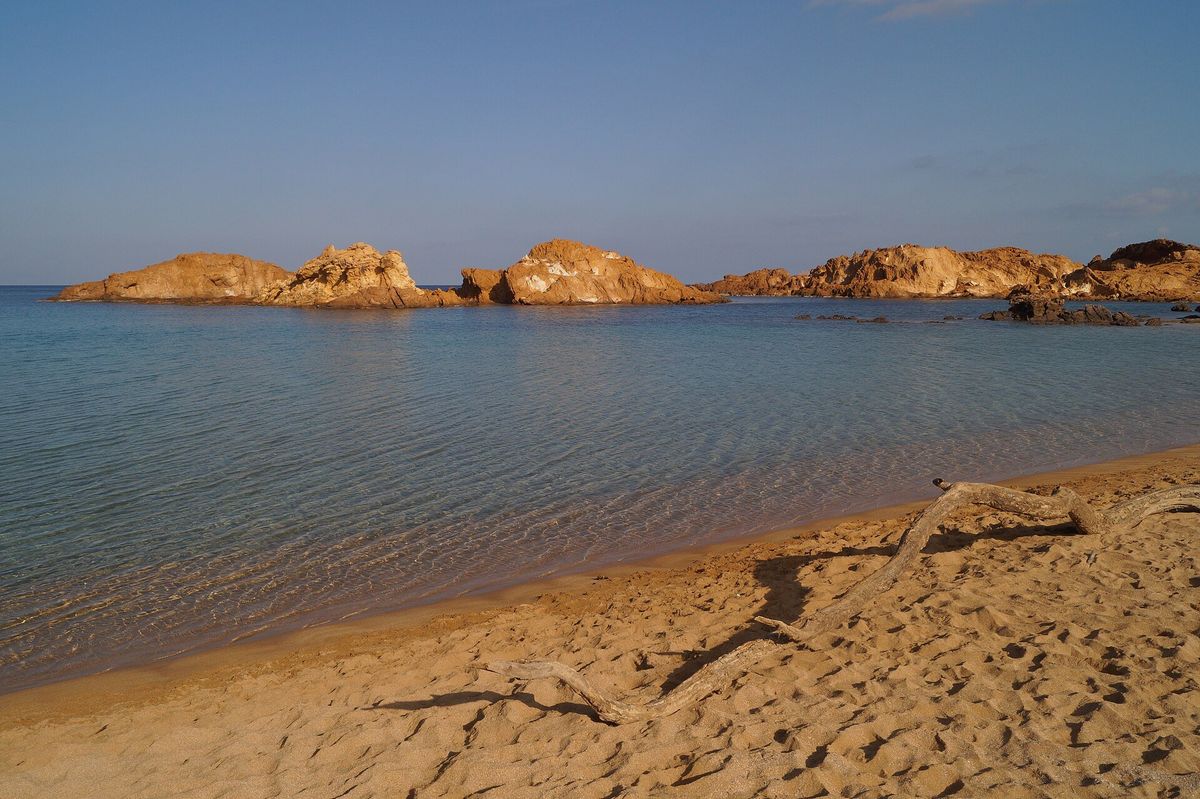
Golden sand and rocky islets at Cala Pregonda, Menorca

Menorca What to Do

The Best Beaches in Menorca

Menorca's six most famous beaches, from the copper sand of Cala Pregonda to the white coves of the south coast. For each one: how to get there, when to go so you miss the crowds, what's there and what to bring. Plus the simple wind rule locals use to pick a coast, and the best months to visit.

Section
What to Do
Island
Menorca
Published

Menorca has some of the best beaches in the Mediterranean, and the six below are the famous ones. They're famous for good reason. The trick is knowing when to go, how to get there and which way the wind is blowing, so you get the beach in the photo and not the crowd.

Before You Go

Two simple rules will make or break your beach day in Menorca.

Go early. The small coves have small car parks, and in summer many have a barrier that closes once they're full. In July and August the popular ones can be full by about 8am. In May, aim to arrive before 10am. Get there first and you'll have a parking spot, shade, flat water and the best light of the day.

Pick your coast by the wind. Menorca's north coast is wild, with red and golden sand and dark rock. It's also exposed to the tramontana, a strong north wind that churns up the sea and clouds the water. The south coast has white sand and pine trees and is usually calmer. So: if the wind is from the north, head south. If it's calm or blowing from the south, go north. Check the wind forecast the night before.
1. Cala Pregonda (and Binimel·là)

Copper sand and turquoise water at Cala Pregonda on Menorca's north coast

North coast, Es Mercadal. On foot only, about 35 minutes.

Pregonda is the wild north at its best: golden, almost copper sand, small rocky islets and clear turquoise water. There are no bars, no sunbeds and no music. You can't drive to it, and that's why it stays this way.
  • Getting there: Take the Fornells road and turn off towards Cavalleria and Binimel·là. Park at the Binimel·là car park, which closes once it's full in summer. Walk across the beach and follow the Camí de Cavalls west for about 35 minutes. The last part crosses private land, so stick to the marked path.
  • When to go: May, June and September are best, with warm water and fewer people. In August, go first thing. Late afternoon turns the sand a deep copper colour.
  • What's there: Just a lifeguard in summer. No bar, no shade, no showers and no bins. Binimel·là has the car park and sometimes a beach bar in season.
  • Good to know: It faces north, so skip it when the tramontana is blowing. The path has almost no shade and nowhere to buy water. Wear proper shoes and bring plenty of water, food and sun protection. On calm days the snorkelling around the rocks at either end is excellent.

2. Cala Mitjana

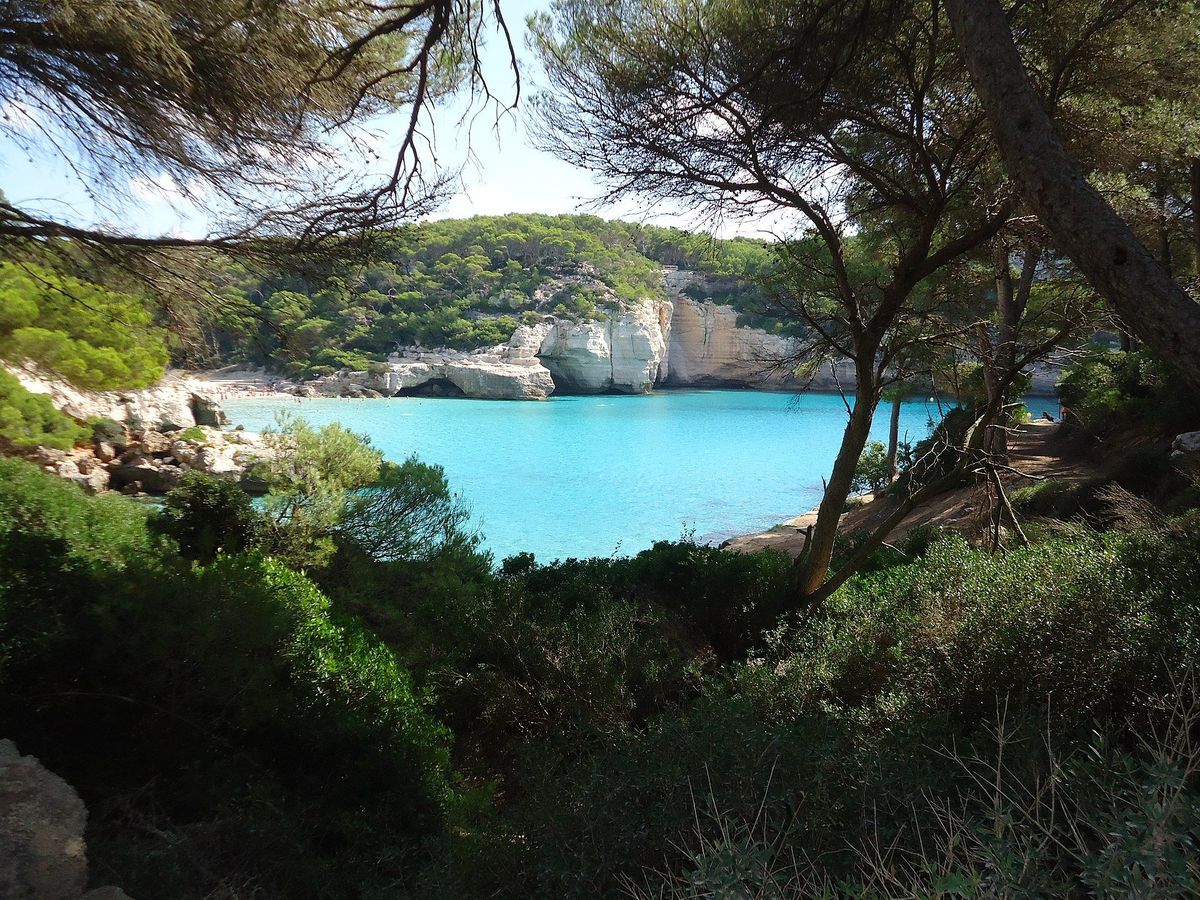
Turquoise water and pale cliffs seen through the pines at Cala Mitjana, Menorca

South coast, Ferreries. Car, then a 15 to 20 minute walk.

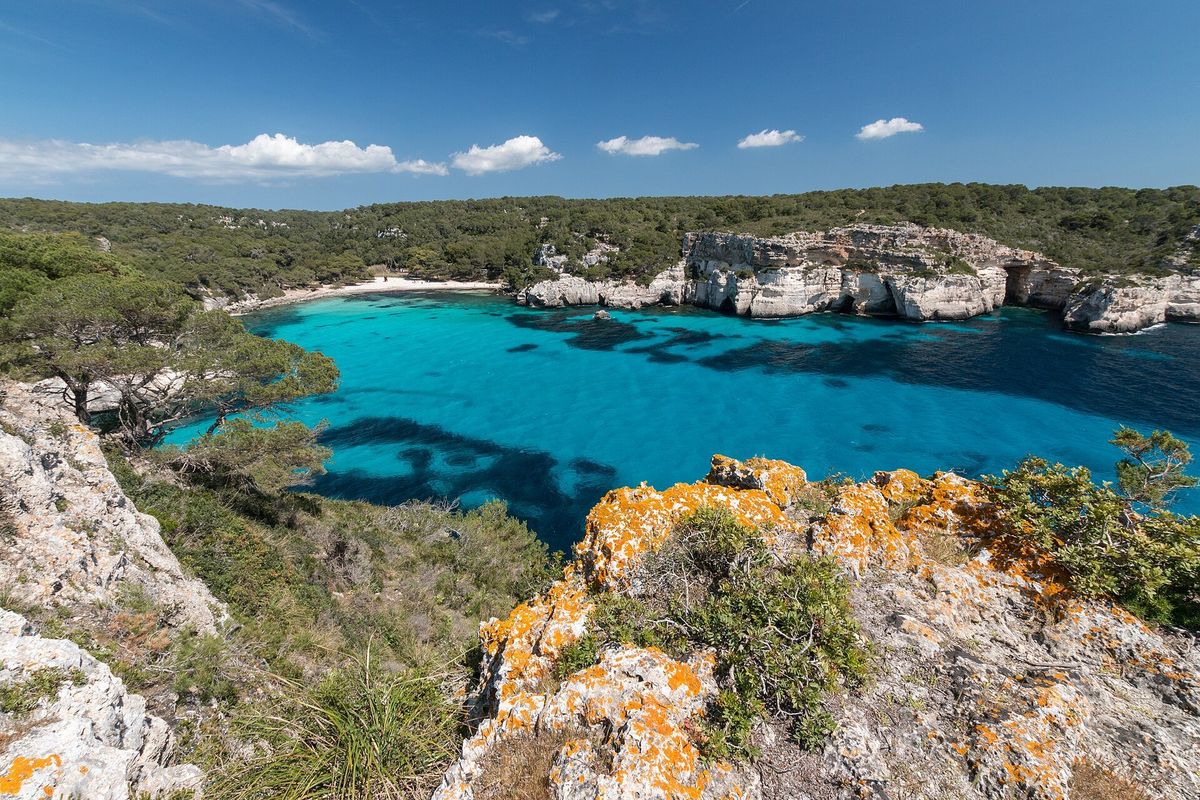
White sand, turquoise water and pale cliffs topped with pine trees. Mitjana is one of the easiest unspoilt coves on the island to reach, and it's also the starting point for walks to the quietest coves on the south coast.
  • Getting there: From the Ferreries roundabout, follow signs to Cala Galdana. Just before the resort, take the signposted turn to the car park. From there it's a little over a kilometre through an oak wood, downhill on the way in and uphill on the way back. Don't mix it up with Cala Mitjaneta, the tiny cove right next door.
  • When to go: Early. In high summer, aim to be there before 10am, when the water is calm and there's still parking. May, June and September are just as beautiful with far fewer people.
  • What's there: Almost nothing: no bar, toilets, showers or bins. There's a picnic area and a lifeguard from June to mid-September. For coffee, a toilet or food, Cala Galdana is about a 10 minute walk away.
  • Good to know: Crowds are the issue here, not the wind. The car park was made bigger in 2024, so more people now arrive at a beach that isn't large, and by mid-morning in July and August it can be packed. If you jump from the cliffs, be careful: depth and sea conditions change. For peace and quiet, swim early, then walk east on the Camí de Cavalls to Trebalúger, Fustam, Escorxada and Binigaus. Each one gets a little wilder.

3. Cala en Turqueta

White sand and clear turquoise water framed by pines at Cala en Turqueta, Menorca

South coast, Ciutadella. Car (limited spaces) or summer bus.

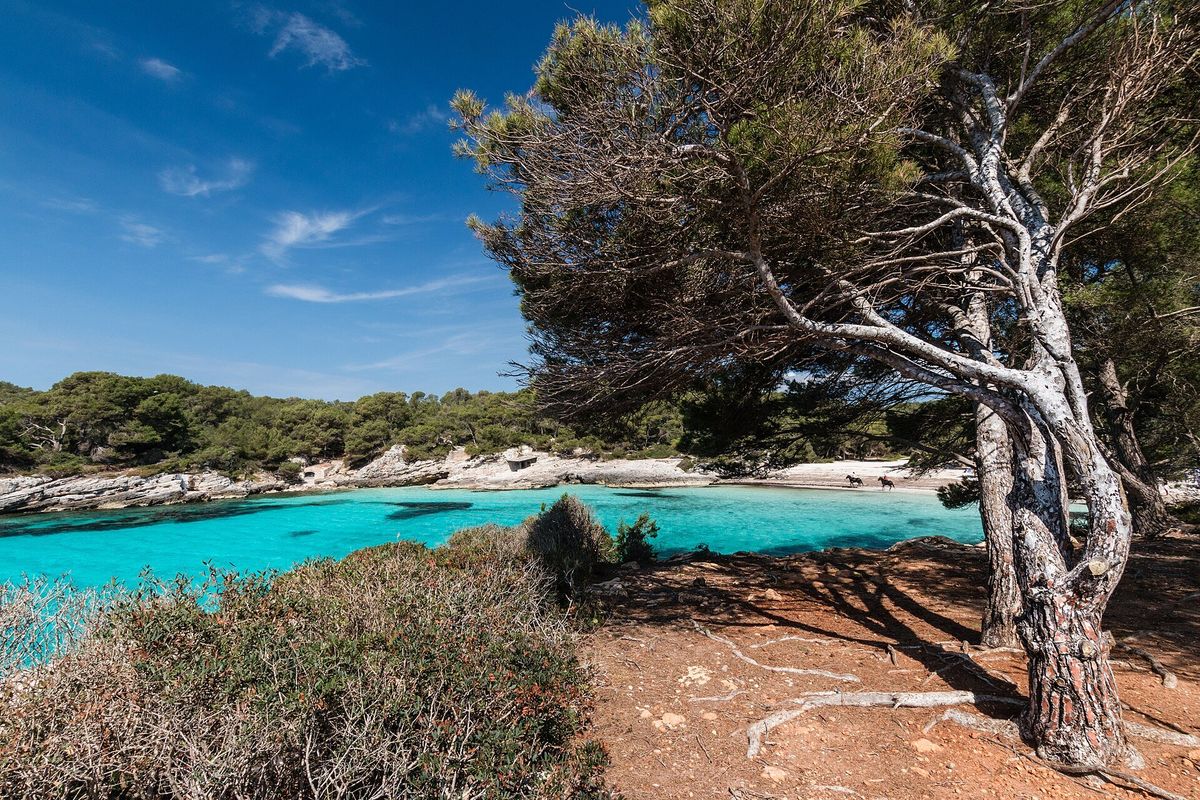
This is the classic south Menorca view: fine white sand, clear turquoise water and pine trees almost down to the shore. It's really two small beaches split by a rocky point. Both are sheltered, and the water stays shallow a long way out, which makes it great for a long, easy swim.
  • Getting there: The cove sits between Es Talaier and Son Saura, at the end of a dirt road. You can drive, but the car park is small and closes once it's full: by about 8am in July and August, and about 10am in May. The easy option is the summer bus from Ciutadella (line 68 in recent seasons), which stops at the same car park. From there it's about a 10 minute walk through the pines.
  • When to go: First thing in the morning, especially in July and August. In high season it's early or not at all. May, June and September are best, with warm water, good light and far fewer people.
  • What's there: Nothing on the sand. In season there are toilets and a small bar by the car park, a lifeguard from mid-May and picnic tables under the pines. Bring water, food, shade and good shoes for the track.
  • Good to know: It's sheltered on most days, but the water looks its best when there's no wind, so check the forecast. The pine shade is rare on the south coast and handy in the middle of the day. Make it a morning plan and walk on to Es Talaier or Son Saura along the Camí de Cavalls.

4. Cala Macarella and Macarelleta

Looking down on the turquoise bay of Cala Macarella from the cliffs, Menorca

South coast, Ciutadella. No cars in summer: bus, bike or on foot.

A horseshoe of white sand, turquoise water and pines right down to the beach. It's the picture most people have in mind when they think of Menorca, which is exactly why it gets busy. Next door, little Macarelleta is wilder and more sheltered.
  • Getting there: Cars have been banned in summer since 2018, roughly June to September (the exact dates shift a little each year). In those months you get there by shuttle bus from a park-and-ride in Ciutadella, by bike, or on foot along the Camí de Cavalls from Cala Galdana (about 3 km, around 45 minutes). Bus dates and times change every season, so check them before you go. Macarelleta is a 10 to 15 minute walk from Macarella.
  • When to go: May, June and September, when it looks like the photos. In high summer the only quiet time is early morning. Catch one of the first buses and you'll have the sand almost to yourself. By midday it's full.
  • What's there: Macarella has a beach bar and restaurant in season. Macarelleta has nothing: no bar, little shade and no bins. Nudity is common there.
  • Good to know: Macarella at 9am and Macarella at 1pm in August are two different places. Bring plenty of water, a picnic, your own shade and proper shoes: the path between the two coves is no place for flip-flops.

5. Cala del Pilar

Red rocks and a small sandy beach at Cala del Pilar on Menorca's north coast

North coast, Ciutadella. A long, tough walk in.

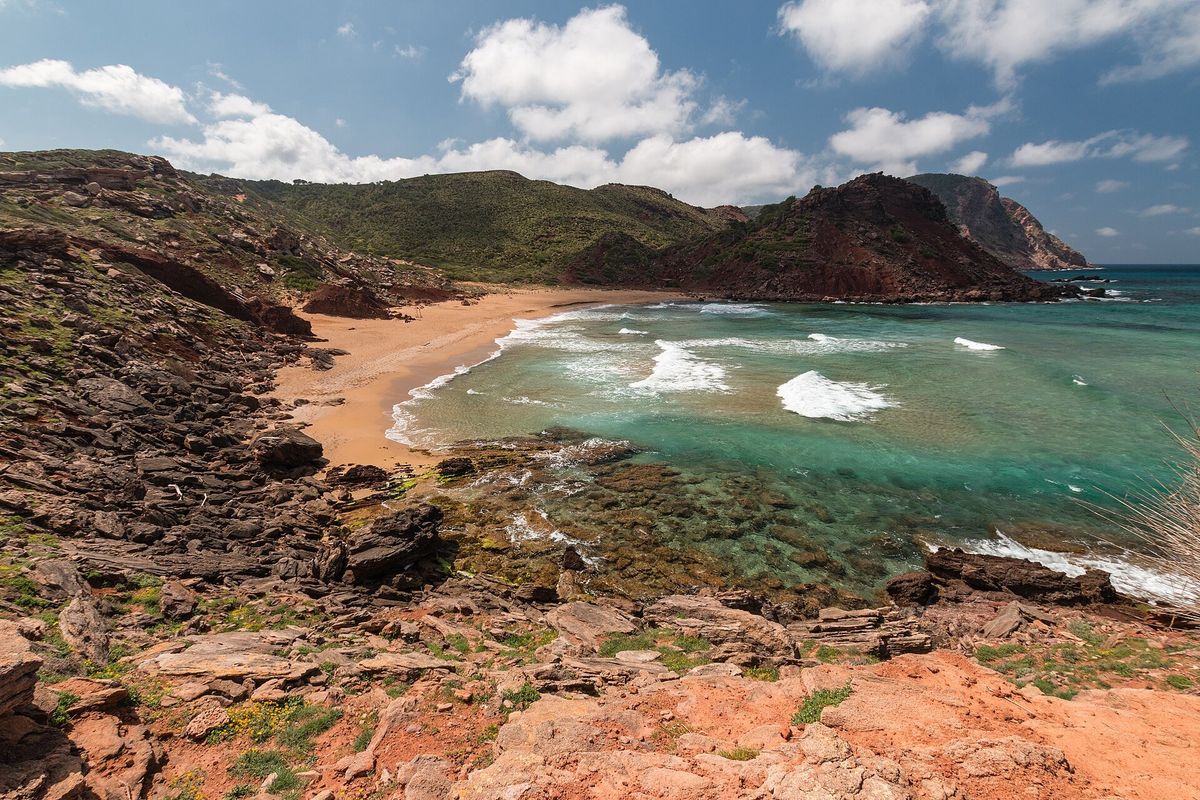
One of the wildest and loneliest coves on the north coast: reddish sand, red rock and real quiet. The hard walk in is what keeps it that way.
  • Getting there: Drive to a dirt car park (it closes once full in summer), then walk the Camí de Cavalls through a wood of wild olive trees. It's long and hard going, so wear closed shoes.
  • When to go: May, June and September, with good light and few people. In August, get to the car park before 9am and you'll likely have the cove to yourself. The low afternoon light makes the sand glow and gives one of the best sunsets on the north coast.
  • What's there: Nothing at all: no bar, sunbeds, showers or bins. Bring plenty of water, food, shade and sunscreen.
  • Good to know: Always check the wind. With a strong tramontana the sea gets rough and the water goes cloudy, so head south instead. There's no lifeguard and no flag, and there can be strong currents, so don't swim if there are waves. On calm days the snorkelling around the rocks is excellent.

6. Platja de Son Bou

Dunes and low cliffs at the quiet end of Platja de Son Bou, Menorca

South coast, Alaior. Car, with parking right by the sand.

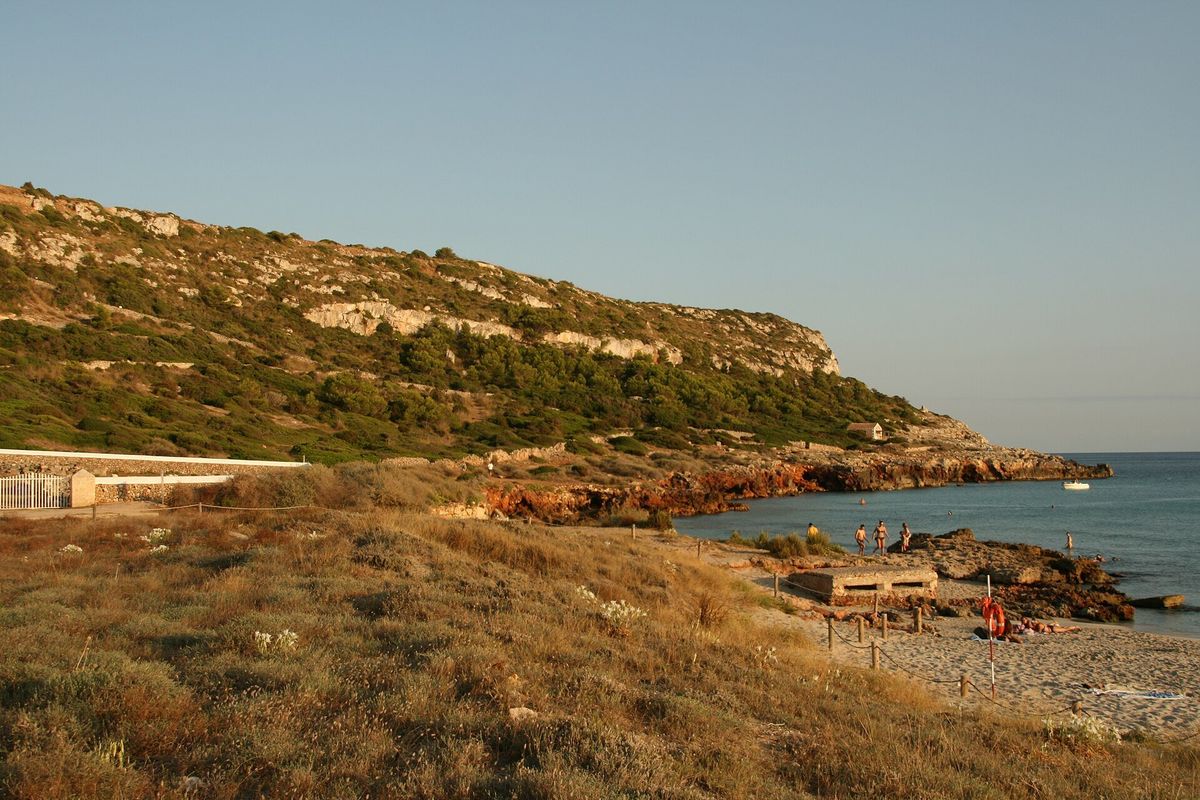
Menorca's longest beach, about 2.4 km of sand. The middle is busy and well set up. The two ends are quiet. Here you don't find peace in a hidden cove, you find it by walking.

  • Getting there: Drive to the Son Bou hotel area, where you can park right by the beach, which is rare on the island. It fills up early in August, so come early or late.
  • When to go: May, June and September, with mild water and space to spread out. Early morning or late afternoon is calmest. The further west you walk, the emptier it gets, in any month.
  • What's there: The middle has hotels, beach bars, sunbeds and a lifeguard. The ends have nothing: no shade, no water, no services.
  • Good to know: Walk west for dunes, low cliffs, a long-standing nudist stretch and the cove of Atalis, where Son Bou meets Binigaus. Behind the beach is the Prat de Son Bou, a protected wetland of about 80 hectares. At the east end are the ruins of an early Christian basilica from the 5th century. Stick to the marked paths: the dunes hold the beach together and the wetland is fragile.

When to Go

In Menorca, when you go matters as much as where. Here's how the year plays out for beach days.

  • November to March: Too cold to swim for most people, but the coves are empty and the coastal paths are perfect for walking. Bring a jumper.
  • April: The countryside is green and in flower and the water starts to warm. Few people around. A good month to explore, if a cold swim doesn't scare you.
  • May: Our pick. The water is warm enough to swim, the days are long and the coves aren't full yet.
  • June: The first half is calm and bright. Things pick up after the Sant Joan festival in Ciutadella (around 23 to 24 June).
  • July and August: Peak season, and you'll feel it. Go early, choose your coast by the wind and spend the middle of the day in the shade.
  • September: The other best month. The sea is at its warmest, the days are still long and most of the crowds have gone home.
  • October: Mild days, golden light and quiet beaches. Some days are still warm enough to swim.

Getting Around

By car. A car is the easiest way to see these beaches, especially if you want to be first in the car park. Book early for summer.

By bus. The island buses link the main towns (Maó, Ciutadella, Alaior, Es Mercadal and Ferreries), and in summer extra shuttles run to more than 25 beaches, including Macarella. Timetables change between summer and winter, so check before you go. The last buses back leave early, so plan your return.

On foot. The Camí de Cavalls is an old coastal path that runs all the way around the island and links many of the coves. Some of the quietest beaches can only be reached this way. Wear good shoes, bring water and a hat.

Look after the beaches. Menorca is a UNESCO Biosphere Reserve and most of these coves have no bins or cleaning. Take all your rubbish home, don't take sand or stones, stay on the paths and close any farm gates behind you. Don't swim when the red flag is up or the sea is rough.
Homes to Rent

All Guides